Tun Abdul Razak bin Hussein, born on 11 March 1922 in Pulau Keladi, Pahang, was Malaysia’s second Prime Minister (1970–1976) and is widely known as the Father of Development. He was a visionary leader who laid the foundations of modern Malaysia through policies focused on rural development, national unity, and socio-economic balance.
Humble, principled, and deeply committed to the rakyat, Tun Razak believed that true development must benefit all Malaysians. His leadership style, grounded in integrity and responsibility, continues to inspire the nation and shapes the core values of the Tun Razak Foundation.
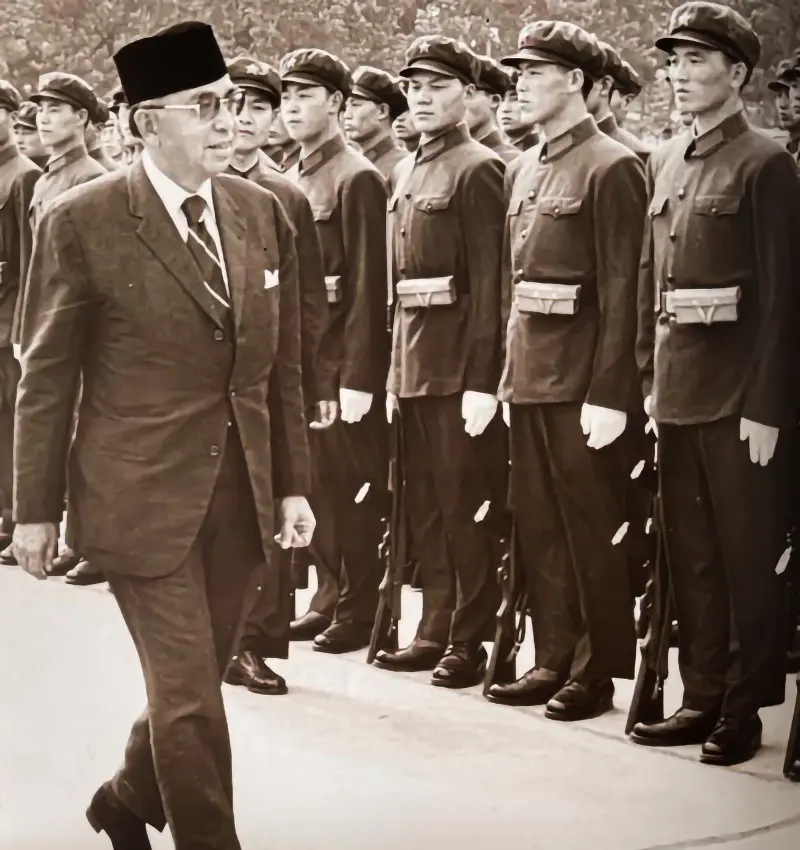
Tun Razak’s vision for Malaysia was clear: a united, democratic,
and prosperous nation built on mutual respect and shared progress.
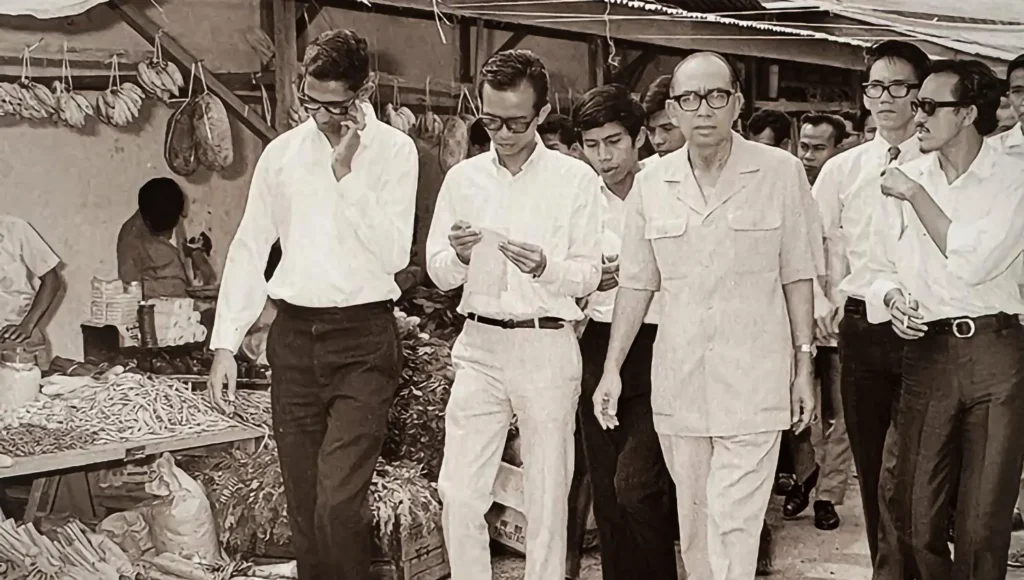
Beyond his transformative policies, Tun Razak was remembered for his values and the methods he applied to leadership and nation-building. Anecdotes from those who worked closely with him reveal a leader truly connected to his people.
Upholding public trust through principled decision-making, with policies guided by long-term national interest rather than short-term political considerations.
Grounding leadership in an understanding of the lived realities of the people, particularly vulnerable and underserved communities.
Focusing on practical, context-driven solutions that balance ideal outcomes with real-world constraints.
Valuing dialogue and collective wisdom, while retaining the courage to make decisive and sometimes difficult choices.
Treating leadership as a profound moral obligation (amanah), taking personal ownership of the nation's development and the active upliftment of the people.
Prioritising the nation's survival and stability above personal comfort, health, or recognition, demonstrating an unwavering, lifelong dedication to duty.
Ensuring that policies translate into tangible grassroots impact by driving accountability and demanding measurable progress over mere rhetoric.
The Tun Razak Foundation draws its inspiration from these very values. We are committed to upholding his ideals through initiatives that promote leadership, understanding, and social upliftment, ensuring that his legacy is not merely remembered, but actively lived for the benefit of all Malaysians.
Tun Razak’s respect for public funds extended even to the most private corners of his life. As Prime Minister, Tun Razak declined the request of his children to build a swimming pool at his official residence (Sri Taman, now known as Tun Razak Memorial). When quoted RM30,000 he immediately deemed it an unnecessary use of public funds.
Under Tun Abdul Razak, the Biro Siasatan Negara was revived and given additional powers and freedom to investigate and take action against corrupt officials and leaders, irrespective of their position.
Tan Sri Abdullah Ahmad, who served as his closest aide for 14 years, reflected on this quiet dignity:
“In his personal habits he was frugal but generous to anyone who was in need, without the least showiness. And he found displays of extravagance and ostentatious living, distasteful. He died a relatively poor man because he did not succumb to the temptations of money.”
— As told by Tan Sri Abdullah Ahmad and Datin Kalsom Tan Sri Taib in Tun Abdul Razak: A Personal Potrait.
During the great floods of the 1970s, Tun Razak had expressed his concern to Tan Sri Mohd Ghazali about a District Officer struggling to manage the crisis. It is then discovered that the officer had abandoned his post, leaving the community without a leader.
While the officer was replaced by someone better suited for emergencies, many including Tan Sri Mohd Ghazali remained frustrated by his failure, despite his previous brilliance in driving development. Sensing this anger, Tun Razak offered a perspective rooted in deep empathy:
“We humans are not equipped with everything. See the good in them and admire it and praise it. An officer would not be productive in a situation unsuited to his abilities.”
— As told by Tun Muhammad Ghazali Shafie and Tun Dato’ Indera Hajah Rahah Tan Sri Dato’ Haji Mohamed Noah in Tun Abdul Razak: A Personal Potrait
Pragmatism:
Tun Abdul Razak was a pragmatic leader who rarely pursued idealistic solutions when they were unlikely to produce practical outcomes. This grounded approach was shaped by his early years in the civil service, beginning with his appointment as Assistant State Secretary of Pahang after completing his studies in London. Working within the administration gave him a firsthand understanding of the realities of governance and the challenges facing the public service.
His pragmatism was evident when the Ibrahim Ali Report on civil service remuneration was published in the 1970s. While some argued that public sector salaries should be raised to match those of the private sector to deter corruption, Tun Razak challenged the premise with a simple but incisive question:
“At what point, in dollars and cents, does corruption lose its temptation? So how much should we give in order to buy honesty?”
Rather than accepting a convenient theory, Tun Razak questioned whether integrity could ever be secured through financial incentives alone.
– As recounted by Tan Sri Lee Siew Yee in Tun Abdul Razak: A Personal Portrait.
In the wake of the May 13 tragedy, Tun Razak was appointed Director of the National Operations Council (NOC). His first priority was to understand the people, he then established the National Consultative Council (NCC), bringing together 35 individuals from diverse backgrounds to identify the crux of the racial conflict. He created a space for honest but importantly difficult dialogues. What was discussed in the NCC was so private that the specifics of those discussions remain a secret to this day.
Once the root causes were understood, he moved beyond temporary peacekeeping towards long-term nation-building. He implemented the New Economic Policy (NEP) to restructure the economy, intentionally dismantling the concentration of wealth to create a more equitable, unified society.
He asked the people to rededicate themselves towards certain ideals which would transcend race, religion, culture, class and political affiliations. Those ideals were created and scrutinised line-by-line by the members of NCC. Today, we know these ideals as the Rukun Negara.
— As told by Tan Sri P.G Lim in Tun Abdul Razak: A Personal Portrait.
Following the May 13 incident in 1969, a state of emergency was declared and Parliament was suspended.
Absolute power fell to Deputy Prime Minister Tun Abdul Razak. As Director of the National Operations Council, he wielded absolute authority. Yet, for a man deeply committed to the rule of law, this was not a triumph, but a reluctant burden.
Viewing his power merely as an emergency tourniquet for a bleeding nation, he confided his profound sense of duty:
“I am a dictator. I rule by decree. It’s an unpleasant business and it’s best to get it quickly over and done with. Unless we restore power to where it properly belongs, to the people through Parliament, all the struggle for independence, the struggle against communism, all that will have been in vain.”
He kept his promise. Just 21 months later, in 1971, he voluntarily dissolved his own absolute authority and restored parliamentary democracy.
— As told by Tan Sri Lee Siew Yee in Tun Abdul Razak: A Personal Potrait
Following the tragic event of May 13th, Tun Razak was diagnosed with leukemia. Though he knew his time was short, he chose to carry the weight of rebuilding a fractured nation.
As his health declined, his resilience was staggering. He endured frequent falls brought on by worsening frailty, resulting in broken bones and a bloodied face. At times, he bled so profusely from his mouth that he struggled to even speak. To protect the country and his family from the burden of his suffering, he always carried a handkerchief to mask the symptoms and keep his condition a secret.
Tun Dr. Mahathir wrote a moving obituary in the New Strait Times under the pseudonym ‘A Colleague’:
“like every mortal, Razak was not perfect; he had his faults but there is no man, no leader of his people who was more selfless in his devotion to his people, country and religion.”
— As told by Tan Sri Abdullah Ahmad in Tun Abdul Razak: A Personal Portrait; YB Tengku Razaleigh Hamzah in NST, 2024 and Tun Dr. Mahathir (A Colleague), “The Selfless Man” in NST 1976.
Tun Abdul Razak believed that development was only meaningful if it was felt by the people, not merely discussed in big meeting rooms. To ensure that development was materialised, he visited every district across the nation, traveling by helicopter, car, boat, bicycle, and often on foot. He was a leader who led from the ground, knowing almost every District Officer.
For those who failed to perform, Tun Razak was a formidable presence. He would often appear unannounced demanding a briefing “army-style”. Complete with maps and progress charts. He had no patience for delays or inaction, forcing the bureaucracy to move at the speed of his own relentless drive.
“With such a workload, it was not surprising to see Tun Razak’s eyebrows always knitted in a frown. He worked all the time. So, the civil servants too had to keep pace. What we did not know at the time was that he was seriously ill. Nevertheless, the more ill he became, the more work he seemed to elicit out of us.”
— As told by Tun Musa Hitam and Dato’ K. Pathmanaban in Tun Abdul Razak: A Personal Potrait.